

Three Trends Driving 2026 Firearm Purchases — Suppressors, Optics-ready Pistols, and Modularity
The three trends driving 2026 firearm purchases — suppressors, optics-ready pistols, and modularity — with the data behind them and honest guidance on which are worth your money.
What Firearm Buyers Are Actually Doing in 2026
Most “trends” articles in this industry are a list of things manufacturers want to sell you. This one has numbers behind it, and we’ll tell you which trends are worth your money and which aren’t — including when the answer is “not yet.”
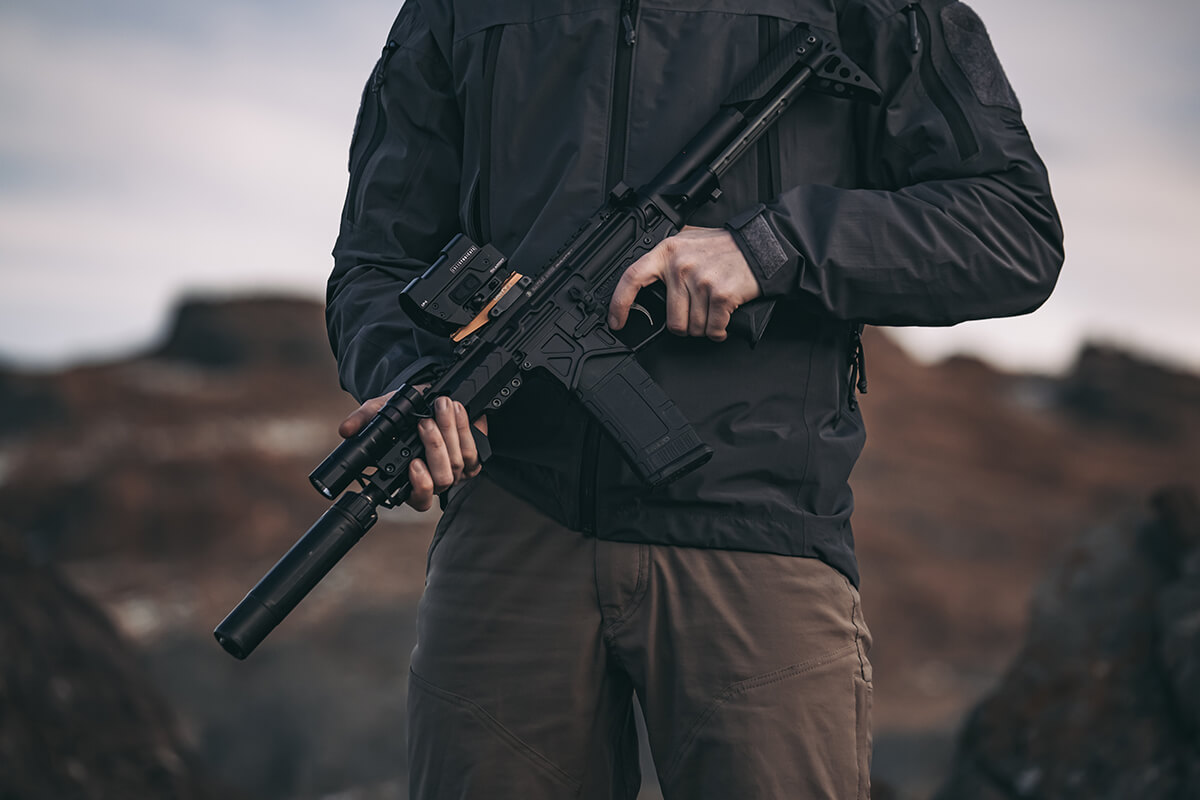
2026 is the year of the suppressor, and it isn’t close
On January 1, 2026, the $200 federal tax stamp on suppressors, short-barreled rifles, short-barreled shotguns, and AOWs dropped to zero.
The response was immediate and enormous:
- More than 845,000 suppressor applications were submitted from January through May, with 768,000 approved
- NFA background checks rose 177% in June over the prior year
- In September, NFA checks were still running 129% above the previous year — eight months in, this isn’t a spike that faded
- Roughly 6.3 million registered suppressors existed as of May 2026
What makes this interesting isn’t the volume — it’s who’s buying. NSSF data shows about 35% of recent suppressor purchasers were first-time buyers, and hunting has risen sharply as a stated primary purpose. This isn’t collectors adding to a safe. It’s people who’d been priced out by a $200 federal tax deciding it was finally worth it.
South Dakota moved too. Governor Rhoden signed legislation removing suppressors from the state’s definition of a “controlled weapon” and eliminating the state requirement tied to the federal tax stamp. For South Dakota hunters, the practical barriers are lower than they’ve been in decades.
Our honest take: if you hunt, a suppressor is worth serious consideration this year in a way it wasn’t three years ago — particularly for anyone who hunts with dogs or with family members. Hearing damage is cumulative and permanent. But understand that the cost barrier dropped, the process is continuing to evolve and may be the most polarizing debate in the industry. And a suppressor changes your point of impact, so budget for range time to re-confirm your zero.
One thing we’ll be straight about: we don’t currently deal in NFA items — that requires a separate license endorsement. We can set you up with everything around a suppressed rifle: mounts, suppressor-height sights, optics, cleaning gear for a suppressed gun. For the can itself, you’ll want a Class 3 dealer. We’d rather say that than waste your time.
Optics-ready is no longer a feature
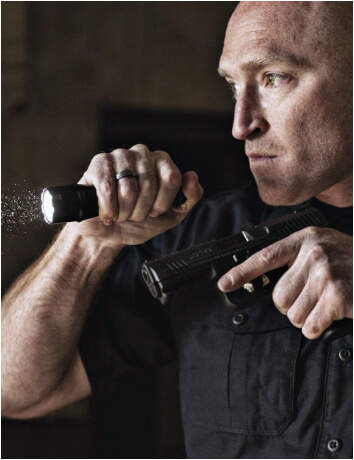
It’s the baseline. Optics cuts are now standard on new pistols at essentially every price point. The useful way to think about it in 2026: if you’re buying a new defensive pistol without an optics cut, you’re buying a 2022 specification.
That doesn’t mean you need a red dot. It means you’re already behind if you buy a gun that forecloses the option.
A pistol red dot genuinely does speed up sight acquisition — with training. Without it, a lot of people spend the first month hunting for the dot on presentation and shoot worse than they did with irons. Budget for the practice, not just the optic.
What we’d actually tell you to check first: the optic cut’s footprint. RMR, RMSc, and ACRO are not interchangeable, and adapter plates add height that changes your sight picture. Know what your slide is cut for before you buy the optic, not after.
Modularity, and when it’s worth paying for
Modular rifles and swappable grip modules are the current default, and the genuine benefit is fit — a chassis or grip module system lets one gun fit different-sized hands, which matters a lot more than the spec sheet suggests.
The honest caveat: modularity you never use is money spent on nothing. If you’re buying one rifle for one purpose, a well-built fixed configuration is often the better buy at the same price.
What hunters are doing
Across South Dakota and the upper Midwest we’re seeing three consistent shifts:
Lighter rifles. For anybody walking, weight matters more than the last 50 fps of velocity.
Better factory ammunition. Factory loads have improved enough that handloading is no longer the only path to good precision for most hunters.
Optics matched to real distances, not maximum magnification. Most game in this region is taken well inside the capability of a 3-9x. Buying 25x for a 200-yard rifle costs you field of view, light transmission, and money.
The common chamberings stay common for good reasons
9mm and .223/5.56 continue to dominate recreational shooting. That’s not inertia — it’s manageable recoil, broad availability, and practice costs low enough that you’ll actually practice.
The best cartridge is the one you’ll shoot a thousand rounds through. For most people that’s still 9mm.
Budget for the setup, not the gun
The most common expensive mistake we see: spending the entire budget on the firearm and nothing on what makes it usable.
| Category | Why it’s not optional |
|---|---|
| Ammunition | You can’t train without it, and it’s a recurring cost |
| Magazines | Two isn’t enough. Plan on four or more |
| Secure storage | Non-negotiable, especially with kids in the house |
| Maintenance supplies | Bore solvent, oil, patches, a rod or snake |
| Optic + mount | Including correct ring height and a torque wrench |
| Hearing and eye protection | Cheaper than the damage |
A good rule: the firearm should be about 60% of what you spend. The rest is what turns it into a setup you’ll actually use.
The fit question — and how to solve it buying online
Here’s the real problem with 2026’s specification arms race: grip geometry, trigger reach, stock fit, balance, and control placement are the things that determine whether a gun stays useful, and none of them show up on a spec sheet.
Handling one in person is the ideal. But most people don’t live near a shop that stocks the specific configuration they’re considering, and a counter with four guns on it isn’t a meaningful comparison either.
What actually works:
- Get the dimensions that matter. Trigger reach and grip circumference are published for most pistols and tell you more than overall length.
- Find the platform family you already fit. If a Glock 19 frame works for your hand, that tells you a lot about what else will.
- Check compatibility before you buy, not after. Optic footprint, light clearance, holster availability, magazine interchange. [link: fitment library]
- Ask. Send us what you’re considering and what you currently shoot. We’ll tell you honestly where the fit risk is — including when we think you should go handle one first.
With our 20,000+ products, most of which ship direct from our distributors, we can get you almost anything.
FAQs
- Why did suppressor sales increase so much in 2026? The federal tax stamp on suppressors dropped from $200 to $0 effective January 1, 2026. More than 845,000 applications were submitted in the first five months of the year.
- Do I still need to register a suppressor if the tax is $0? As of today, no. The tax changed; the registration process continues to evolve.
- Is an optics-ready pistol worth it if I don’t want a red dot? Yes — it preserves the option without requiring you to use it. Optics cuts are standard across price points in 2026, so you’re generally not paying extra for it.
- What’s the best caliber for a first handgun? 9mm for most people. Manageable recoil, wide availability, and ammunition cheap enough that you’ll actually practice.
- How much should I budget beyond the firearm itself? Plan on the firearm being roughly 60% of total spend. The rest covers ammunition, magazines, storage, maintenance, and optics.
The cost barrier dropped. The process didn’t. We ship direct from our distributors, which means we can get you almost anything. It also means we’d rather talk you out of the wrong thing than ship it.